


Facebook Lite
Meta Platforms, Inc.
I installed Facebook Lite to see whether a lighter Facebook experience actually changes the way I keep in touch, rather than simply taking up less space. My first impression was practical: this is a social app built for people who want access to familiar Facebook communication without making a fast connection or a powerful phone a requirement. It is free, made by Meta Platforms, Inc., and aimed at a Teen audience.
That distinction matters. I did not find it most useful as a complete replacement for every modern social tool. I found it more valuable as a reliable doorway into posts, groups, messages, notifications, and everyday updates when the full Facebook experience feels too heavy or distracting. Its biggest strength is not glamour. It is the way it keeps basic social contact available when conditions are less than ideal.
Why a lighter Facebook can change the way you communicate
Useful when staying connected matters more than presentation
Facebook Lite makes sense for a very specific communication need: checking in with people and communities when you do not want the app itself to become a large part of your phone experience. The store description emphasizes lower data use and operation across network conditions, and that matches the role I would give it. I think of it as a practical communication layer rather than a polished entertainment destination.
Related News

How Facebook Lite Redefines Mobile Connectivity in Emerging Markets

Instagram vs. Competitors: Which Social App Reigns Supreme?

Why Facebook Still Works as a Social Neighborhood
For example, imagine a normal weekday in which your main connection is unreliable. You may want to see a family update, answer a message, check a local group, or read a notice from an organization you follow. A heavier social app can make that simple intention feel like a commitment. Facebook Lite is better suited to opening the app, handling the immediate task, and leaving again.
That rhythm is especially helpful for people who use Facebook for several small reasons instead of one large one. I might open it to look at a neighborhood discussion, respond to a relative, then check a group related to an interest. None of those actions requires a visually elaborate experience. The lighter approach keeps the focus on access and basic interaction.
Related News

Why WhatsApp Messenger Still Makes Everyday Communication Feel Easy

Jurassic World: The Game Is the Better Dino Tycoon for Strategic Players

Threads in Real Life: Who Should Join, Lurk, or Leave

How SHEIN Turned Shopping Into an Endless Content Feed

How to Make Fortnite Feel Smarter on Mobile

Should You Switch to Microsoft Outlook on Mobile?
It is also a sensible option for an older or less capable Android phone, or for anyone trying to keep mobile data under control. I would not describe it as a private messenger, a minimalist social network, or a distraction-free tool. It still leads into the broad Facebook environment, with all the variety and noise that comes with that. Its advantage is that it lowers the practical barrier to using that environment.
What I would do before making it my everyday social app
I would begin with one clear purpose instead of treating it as an endless feed. Decide whether you mainly need messages, groups, family updates, or local information. Then open it for that reason first. This sounds simple, but it changes the experience considerably: the app becomes a place to complete a social task rather than a place where every notification decides what you do next.
My most useful habit was separating checking from responding. I would look through the relevant updates, answer anything that genuinely needed an answer, and avoid interpreting every new post as an invitation to participate. Facebook Lite makes this approach easier because its practical, compact character encourages short visits.
Gallery
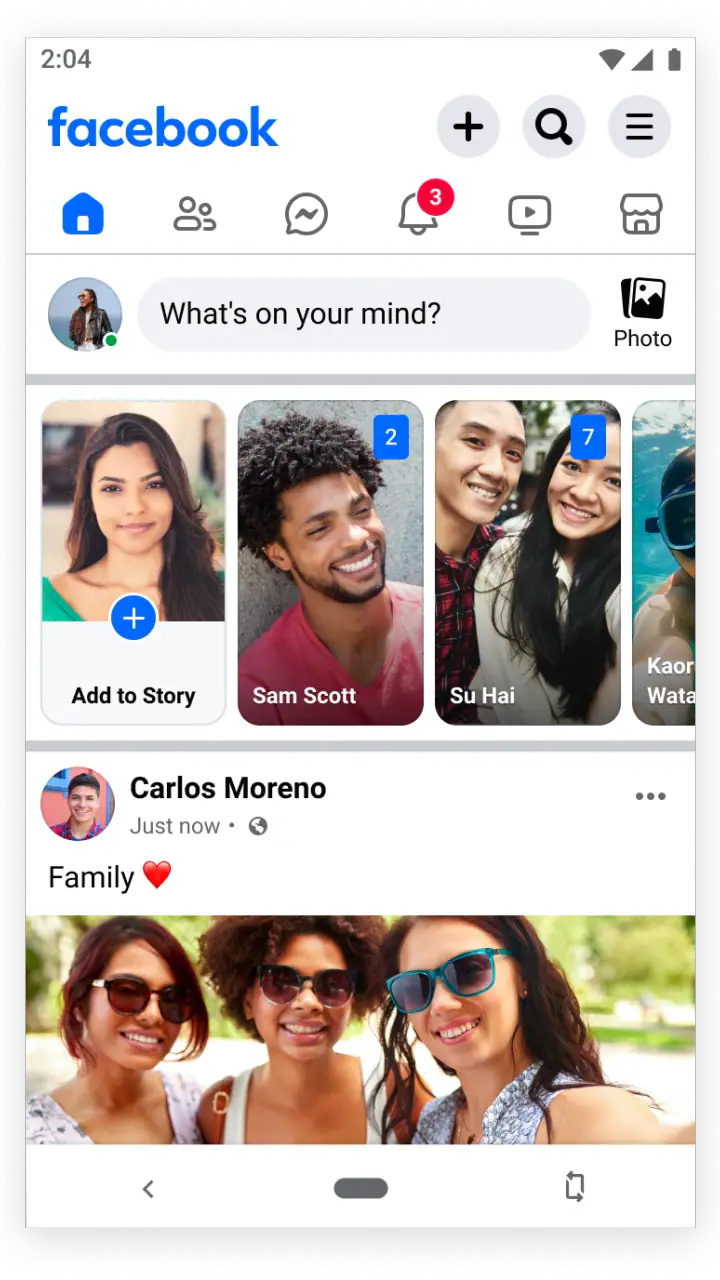
There is also a useful trade-off here. A lighter client can make Facebook feel less demanding, but it cannot decide what deserves your attention. If your feed is crowded, the app will still present a stream of competing conversations. The benefit comes from using its efficient access deliberately, not from assuming that a smaller app automatically creates a calmer social life.
How conversations feel in a lighter environment
In my experience, the conversation flow is best when the exchange is straightforward. Facebook Lite works well for short replies, checking a group thread, reacting to a family post, or following a discussion that does not depend on a highly visual presentation. It supports the kind of communication where the important thing is knowing what people said and replying without ceremony.
That makes it useful for communities that organize themselves through Facebook groups. A group can act as a noticeboard, a local help desk, or a place to exchange recommendations. I would use Lite to scan the latest conversation, identify whether someone needs an answer, and return later if the discussion becomes more involved. This is a better fit than opening the app every few minutes simply because a new update might have appeared.
The same approach works for family communication. One person may post a photo or update, another may add a comment, and the conversation can continue at a relaxed pace. Facebook Lite suits that asynchronous rhythm. It does not require everyone to be available at the same moment, which is useful when relatives live in different places or follow different schedules.
However, I would not choose it when the conversation depends on a rich media experience or when I want the most polished version of Facebook’s broader ecosystem. The lighter design is about efficiency, and efficiency can mean less visual comfort or fewer refinements than a full-featured alternative. If presentation, media discovery, or a more immersive browsing experience is central to you, the standard Facebook app may feel more natural.
Small workflows that make the app easier to live with
One workflow I recommend is the “message first” visit. I open the app with a specific person or conversation in mind, deal with that exchange, and only then decide whether I want to browse. This prevents a quick reply from turning into an unplanned feed session. It is particularly effective when I am checking Facebook during a work break or while traveling.
A second workflow is to use groups as destinations rather than relying entirely on the general feed. If a group contains the information I actually value, going directly to that community gives the visit a clearer beginning and end. It also reduces the chance that unrelated posts will set the tone of the session.
A third is to treat notifications as prompts, not orders. I read the notification, judge whether it needs an immediate response, and postpone the rest. That distinction is important because social apps often turn other people’s timing into our own perceived obligation. Lite can help with the mechanics of checking, but the boundary still has to come from me.
The attention cost is lower, but it is not gone
The main attention advantage is that the app feels easier to open for a narrow purpose. I am less likely to think of it as a major entertainment installation and more likely to see it as a utility for social contact. That mental framing alone can improve my behavior. I can check a group, answer a message, and close the app without feeling that I have started a large browsing session.
Still, Facebook remains Facebook. The feed can combine personal updates, group activity, recommendations, and other material that competes for attention. A lighter app does not remove the emotional pull of seeing new comments, reactions, or arguments. In fact, quick loading can sometimes make it easier to check repeatedly because there is less friction between impulse and access.
My solution is to establish a reason before opening it. “I am checking the family group” is useful. “I will see what is happening” is much less useful, because it gives the feed control over the visit. I also prefer to read a small amount carefully rather than scroll until something forces me to stop. That keeps the app in a supporting role.
There is a deeper communication issue here. Fast access does not necessarily create better conversations. When replies are easy, I may answer too quickly, react without enough context, or join a discussion simply because it is visible. I get better results when I pause before responding to sensitive posts and ask whether my contribution clarifies anything. The app can shorten the path to communication, but it cannot improve the quality of every message.
Where boundaries become especially important
I would be cautious about using Facebook Lite as an always-on social background. If you already feel pulled into checking updates throughout the day, the lighter experience may remove enough friction to reinforce that habit. In that situation, a stricter schedule or a less socially dense alternative may serve you better.
For me, the most useful boundary is deciding when Facebook is allowed to interrupt the day. I prefer to check at chosen moments rather than letting every alert create a new social task. I also avoid opening it immediately before sleep, because a simple family update can lead into a long chain of posts and conversations.
Another boundary concerns emotional distance. Facebook groups can be helpful, but discussions can become personal, repetitive, or confrontational. I try not to confuse visibility with importance. A post appearing near the top of my feed does not mean it deserves an argument. Leaving a conversation is sometimes the clearest and healthiest response.
I would also keep the app’s purpose separate from urgent communication. Facebook Lite is useful for ordinary social contact, but I would not rely on a social feed for something that requires guaranteed immediate attention. For urgent matters, I would use a communication method designed around direct contact and make sure the person knows which channel to use.
Who will appreciate it most
I think Facebook Lite is a strong fit for people who use Facebook mainly for groups, family updates, community information, and occasional messages. It is also appealing if your phone has limited resources or your connection is inconsistent. The free price removes the financial barrier, while optional in-app purchases range from twenty-nine cents to one hundred seventy-nine dollars and ninety-nine cents per item, so I would still pay attention to any purchase prompts.
Its scale shows how established the app is: it has more than one billion installs, an average rating of four point five, and around thirty-seven million ratings. Those figures do not guarantee that its interface will suit everyone, but they do indicate that it serves a very large audience. I would interpret that as reassurance about its general purpose, not as proof that it is the best Facebook experience for every phone.
I would be more hesitant to recommend it to someone who wants a highly polished visual feed, advanced media browsing, or a social app with very little content variety. I would also hesitate if the person is trying to reduce Facebook use rather than make Facebook easier to access. In that case, the lighter installation may solve the wrong problem.
How it compares with the usual alternatives
Compared with the standard Facebook app, Lite is the more practical choice when connection quality, data use, or phone capacity matters. The full app is likely to feel more comfortable for people who value richer presentation and a broader, more polished browsing experience. I would choose between them based on what I do most often, not on the assumption that one version is universally superior.
Compared with a dedicated messaging app, Facebook Lite is broader but less focused. It connects conversations with groups, public updates, and the rest of the Facebook environment. A dedicated messenger is usually a better choice when I only need direct, intentional conversations and want less feed-related temptation.
Compared with smaller social networks, Lite offers access to the people and communities already using Facebook, which can be its decisive advantage. The cost is that the experience may feel busier and less controlled. I would choose it when the people I need are already there, not because I expect it to provide the calmest social space.
What the rating and release history tell me
The app was released on March 15, 2018, and its long presence helps explain why its purpose is so clear. This is not an experimental social concept. It is a focused version of Facebook designed around access under varied network conditions. Meta Platforms, Inc. has kept it positioned as a practical way to use the service rather than turning it into a separate social network.
Its Teen content rating is worth remembering for families. The label describes the intended age category, but it does not mean every conversation or post will feel suitable for every younger user. I would still discuss sensible online boundaries, especially around public groups, personal information, and responding to strangers.
The large number of ratings and strong average score suggest that the basic promise works for many people. My own judgment is more specific: the app succeeds when I need Facebook to remain available without demanding a premium device or a perfect connection. It is less convincing when I want a carefully curated, visually rich, or especially quiet social experience.
My final social verdict
After using it, I see Facebook Lite as a tool for keeping communication reachable and manageable. It changes the rhythm of Facebook by making short visits feel more reasonable, especially when I focus on messages, groups, and practical updates. That can be a real improvement for someone who wants contact without turning every check-in into a long browsing session.
Its limitations are just as important. It does not automatically create better boundaries, remove distracting content, or make every conversation clearer. If I open it without a purpose, I can still lose attention to the feed. If I need a rich media experience, the regular app may be a better fit. If I want only private conversations, a dedicated messenger may be more focused.
For the right person, though, the balance is convincing. Facebook Lite is free, widely used, and built around a simple idea: keep Facebook usable when conditions are not ideal. I would recommend it to a friend who relies on Facebook communities or family contact but has limited data, an older phone, or a preference for quick social check-ins. My strongest advice would be to pair it with deliberate notification and browsing habits. Used that way, it gives communication room in the day without needing to occupy the whole day.
FAQs for Facebook Lite
What is Facebook Lite and how is it different from the regular Facebook app?
Facebook Lite is a streamlined version of the regular Facebook app designed for devices with limited resources or slower internet connections. It uses less data and works on all networks, making it ideal for areas with 2G or unstable internet. Despite being lighter, it still offers core functionalities like posting updates, messaging, and viewing notifications.
Does Facebook Lite offer the same features as the standard app?
While Facebook Lite provides essential features like posting, commenting, and messaging, it lacks some of the advanced functionalities found in the standard app. Features such as Facebook Stories or Marketplace might not be fully supported. However, it ensures a smooth experience on low-end devices or in areas with limited connectivity.
How much data does Facebook Lite consume compared to the regular app?
Facebook Lite is optimized to use significantly less data than the full Facebook app. It compresses images and limits background data usage, which helps users with limited data plans or those in regions with expensive mobile data. This makes it a great choice for cost-effective browsing and social media interaction.
Is Facebook Lite secure and does it protect user privacy?
Facebook Lite offers security features similar to the standard app, including account protection and privacy settings. Users can manage their privacy settings to control who sees their posts or personal information. However, like all apps, it's important to keep it updated to benefit from the latest security enhancements.
Can I use Facebook Lite alongside the regular Facebook app on the same device?
Yes, you can install and use both Facebook Lite and the regular Facebook app on the same device. This can be useful if you want to switch between a data-saving mode and full feature access depending on your needs or network conditions. Both apps will function independently without interfering with each other.
Pros
- Consumes less data compared to the standard app.
- Works efficiently on older Android devices.
- Fast performance even with slow internet.
- Requires minimal storage space to install.
- Includes core Facebook features like messaging.
Cons
- Lacks some features of the full Facebook app.
- Image and video quality may be reduced.
- Limited customization options available.
- Occasional issues with app stability.
- User interface is less polished and basic.


